
If doctors can read research papers online, attend webinars from home, and use AI to summarize medical literature in seconds - why do thousands of them still travel to attend in-person medical conferences?
Because access to information isn’t the same as interaction.
A paper gives you information. A conference gives you a conversation.
“When you read a research paper, you get the study, results, and conclusions. But you can’t immediately ask the researcher why they chose that approach.”
You can’t challenge their interpretation or hear another expert explain why they disagree. At an in-person conference, you can. And that’s where scientific discussion becomes much more than simply consuming information.
The Hidden Value Between Sessions
The most valuable moment might not be on the stage. Think about what happens between sessions.
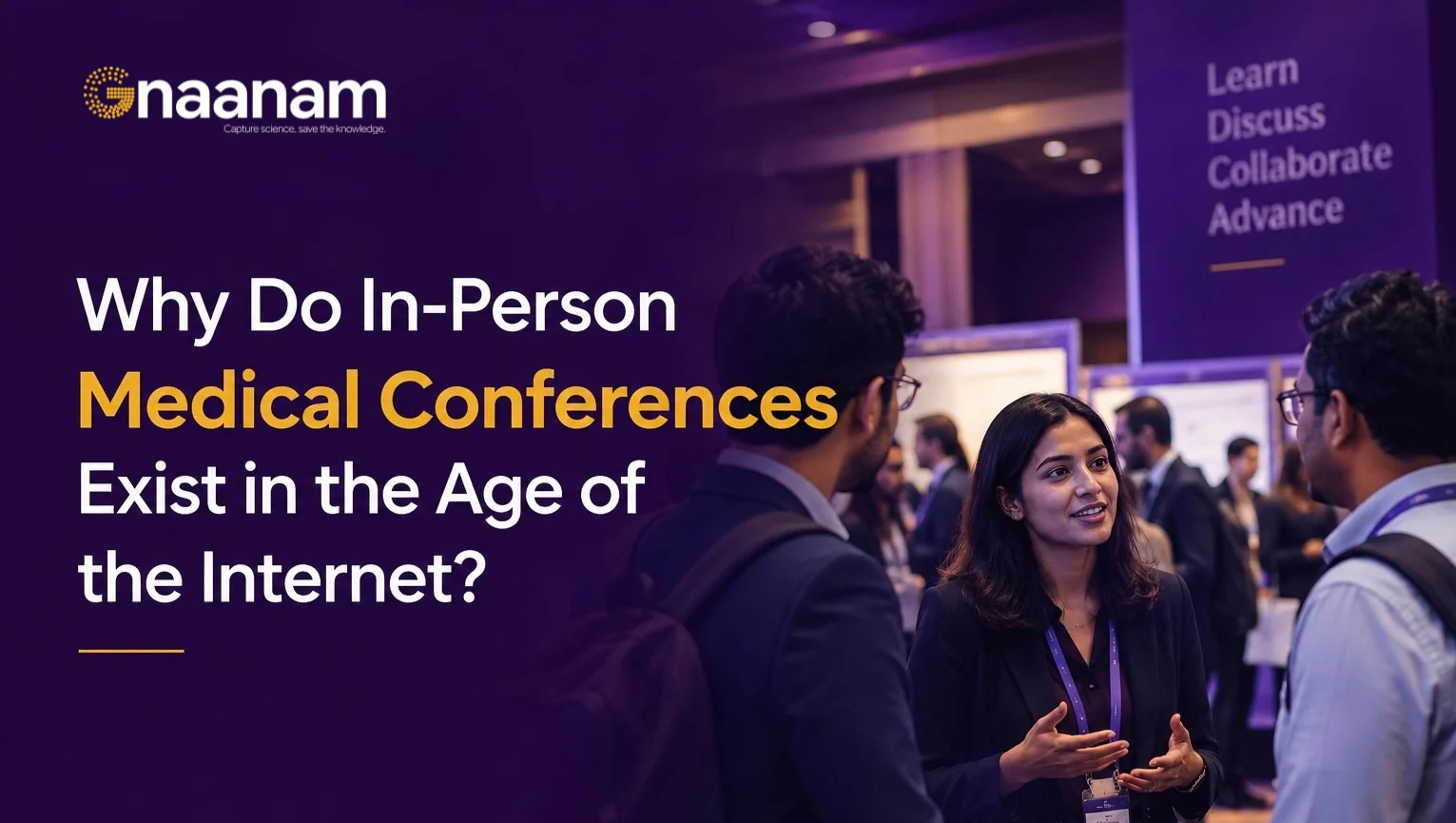
A researcher meets another researcher. A doctor discusses a difficult clinical problem with a colleague. A young professional meets an expert they’ve been following. Someone mentions an idea over coffee that eventually becomes a research collaboration.
These interactions aren’t usually on the conference schedule. Yet they can become some of the most valuable parts of attending.
What about webinars?
Webinars are excellent for learning. They remove travel costs, save time, and allow people from anywhere to access experts.
But attending a conference in person offers something different: Learning + discussion + networking + scientific debate + unexpected interactions.
You aren’t just listening to information. You’re participating in the conversation around it.
Conferences also allow ideas to be challenged in real time. Science progresses through questions.
A researcher presents new findings. Someone questions the methodology. Another expert offers a different interpretation. The presenter responds. A new research question emerges.
That real-time exchange can help shape what researchers investigate next.
So, why do in-person conferences still matter?
The internet solved the problem of access to knowledge. It didn’t completely solve the problem of human interaction around that knowledge.
You can read what a researcher discovered. But sometimes you need to ask why.
You can watch a presentation. But sometimes you need to challenge the conclusion.
You can join an online community. But sometimes the most valuable conversation happens when two people simply meet in the same room.
“Medical conferences aren’t just about bringing information to people. They’re about bringing people together to question, discuss, and build on that information.”